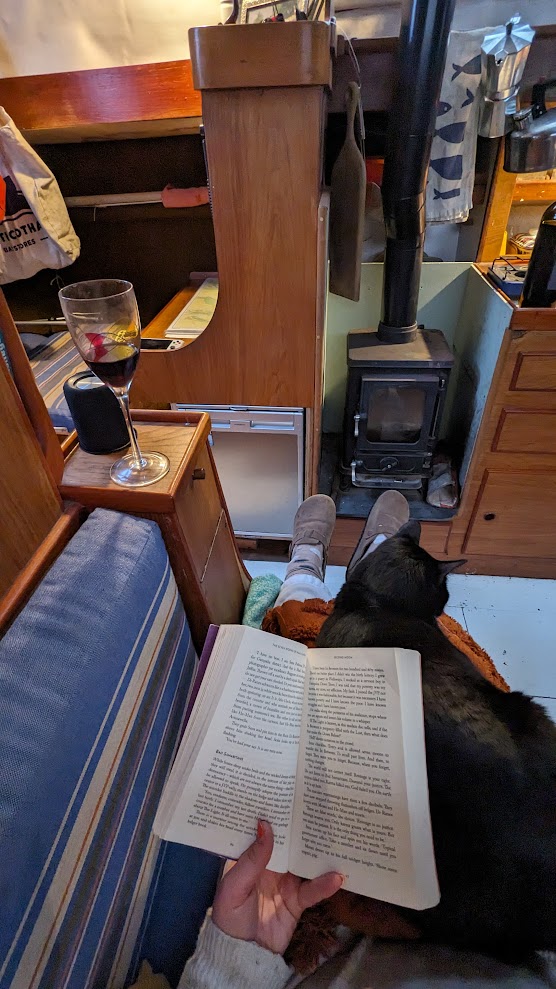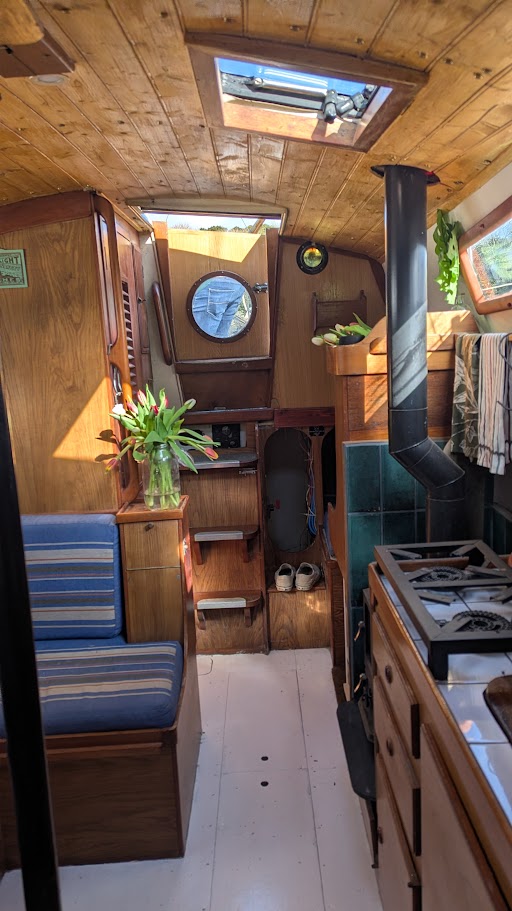
The light that pours through our windows and portholes comes in different shapes and sizes. There are the blocky rectangles that spotlight odd corners, stretching and warping as we bob; there are wavering smudges that dance; there are diagonal beams that slice through shadows, pocked by stubborn tape shadows no amount of steam will shift. I watched it one Saturday morning, perched upon the end of our bed in the forepeak. Usually, the way it refracts and bounces is decoration enough on Lowenna, but today grey clouds have flattened the light and cooled it, and have in turn pushed my mind towards trinkets.
Jason and I are decorative people, and pride ourselves on creating spaces that reflect us. So how do we decorate our boat, whose very existence is driven by our desire to have less?
We have been living on land since November 2024 when we began Lowenna’s refit. I don’t think it was our intention to stay off the sea for this long, but we got used to the comfort and ease of convenience – things like having hot water at our finger tips, or being able to roast a chicken without arranging a whole event at our loved ones’ homes. Our tiny Newquay flat became a place of solace, away from the dampness and chaos that was the boat mid-renovation or Jason’s job at a local boat yard. It has afforded us stability during stormy periods, and clarity to realise that homeowning, as daunting as it feels sometimes, is something that we want to pursue. But in the midst of wars, endless rising living costs and normal people being tyrannised by the capitalist overlords whose only priority is their pockets, the only way we can become land-loving homeowners is to return to Lowenna for a prolonged period, that will hopefully culminate in us saying goodbye to her, and hello to somewhere new.
For friends, who have known about our plan to sell Lowenna and lean into being proper adults, this could seem like a backwards step, but this time isn’t like 2023. We aren’t selling, donating, or scrapping all of our belongings, but storing them instead. We aren’t going to squeeze our lives into every nook and cranny of the boat and act like it’s not terrifying whenever a storm whips through, or we take her for a sail along the river. There is a lightness – both physically and emotionally – we get to make at the moment, and one of the biggest surely has to be: what is coming back on board with us? Because as happy as I am to simplify and cut back once again, there’s no way I’m living in a solely practical cube – do you really think I’d sacrifice my desire for homeliness for total practicality? Please.
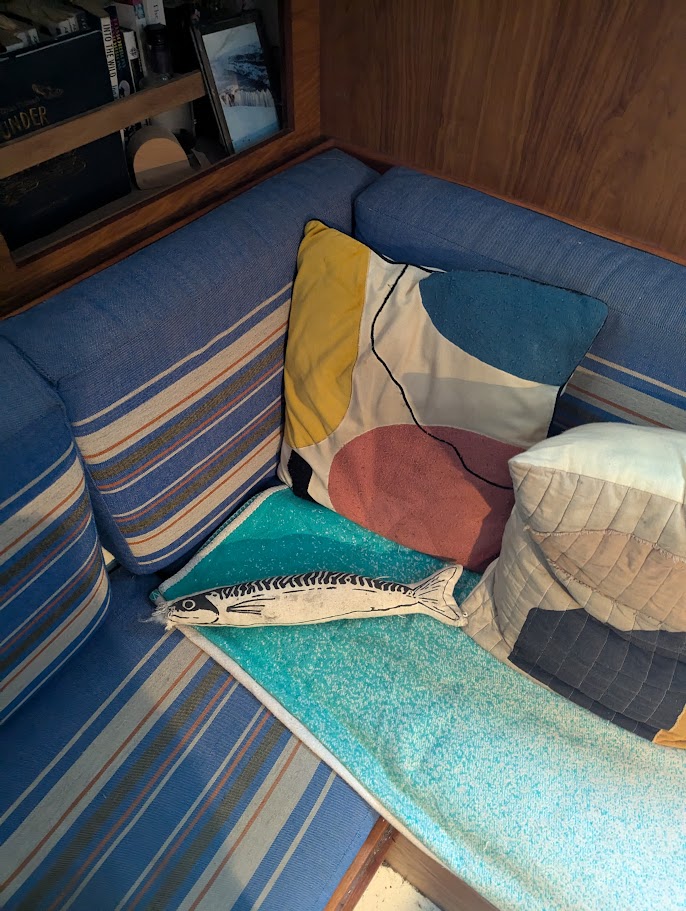
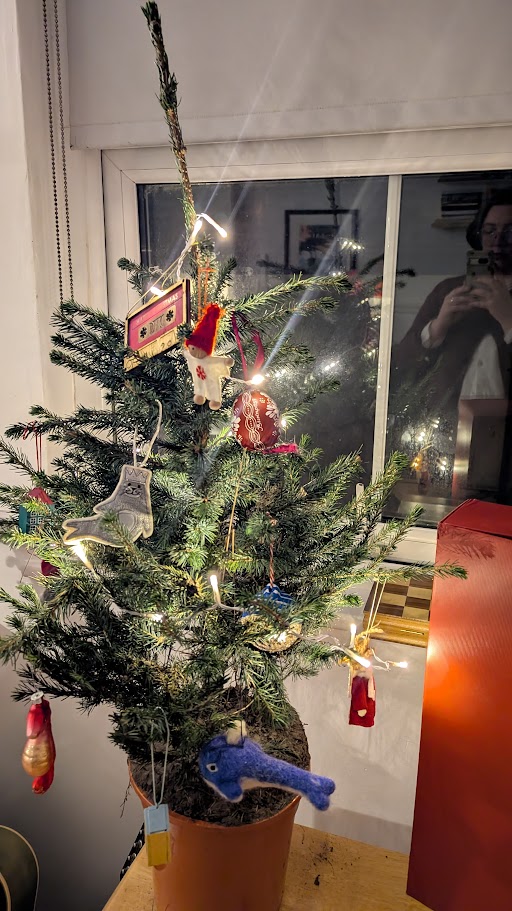
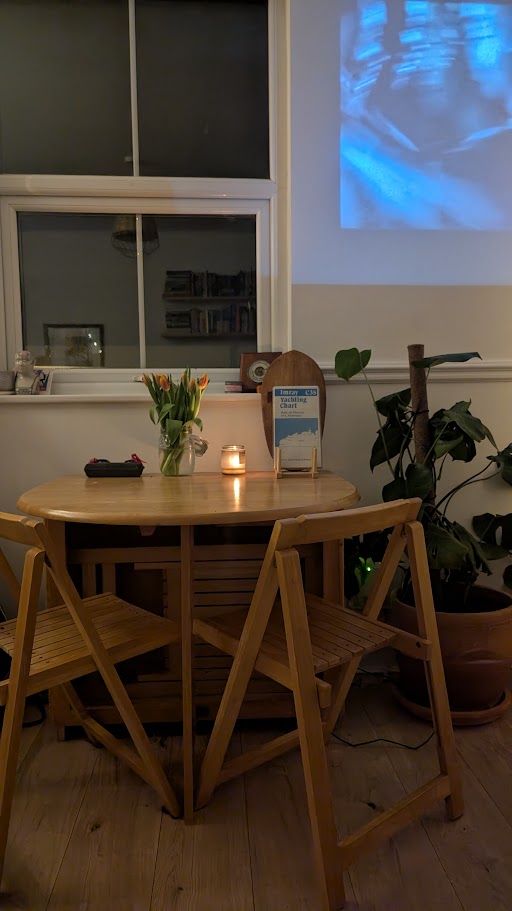
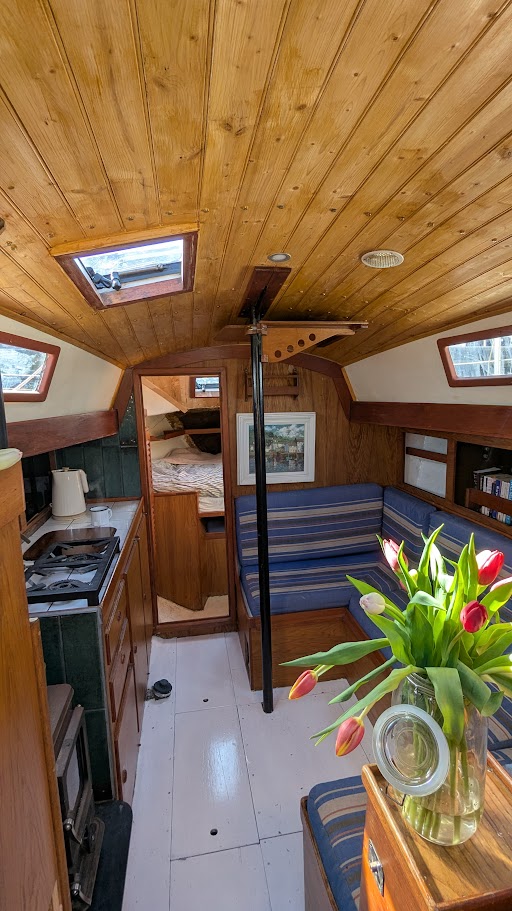
When you buy those cute little bits for the house, you don’t need to think. Sure, you have to consider styles and costs, but you know that whatever you buy is either going to go inside or outside, and you know it’s probably going to be safe. Deciding what bits you should have on your boat requires layered and nuanced decision making. How heavy is it? Would it need strapping down when things get rocky? Does it need a power source? If so, how much power would it need? Would we be upset if it got wet, damaged, mouldy? Does it need hanging, and if so, how much wall space is needed?
When I think about the things that we use to decorate the boat, there are two criteria that it has to meet. Sometimes they go hand-in-hand and it makes life easy, but sometimes they are rivals: utility and vibes.
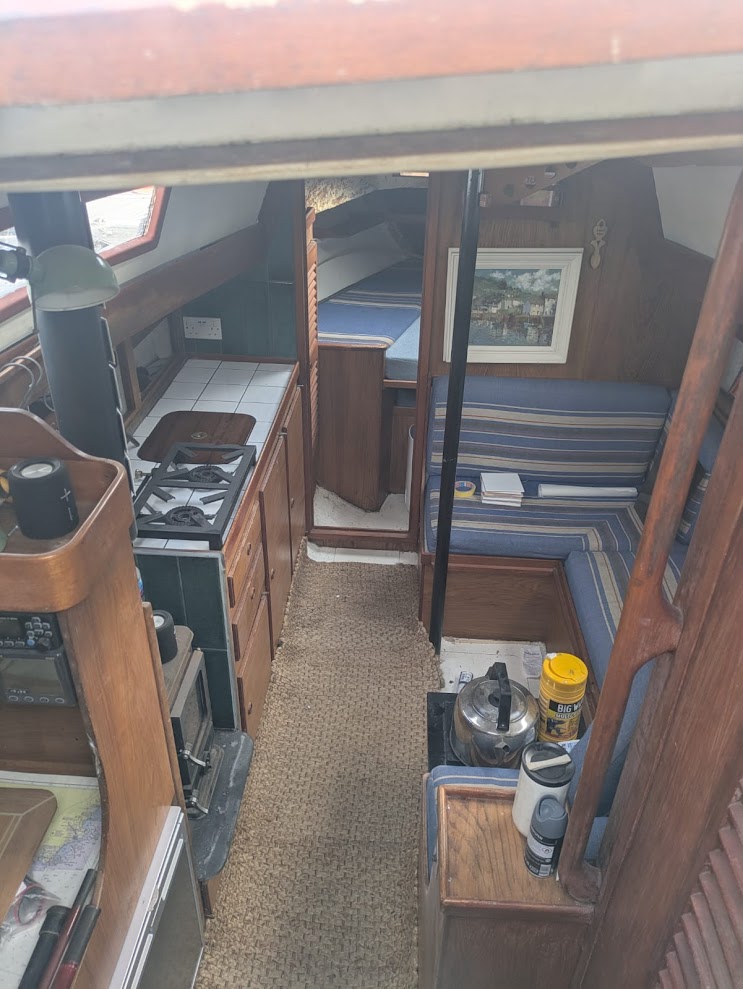
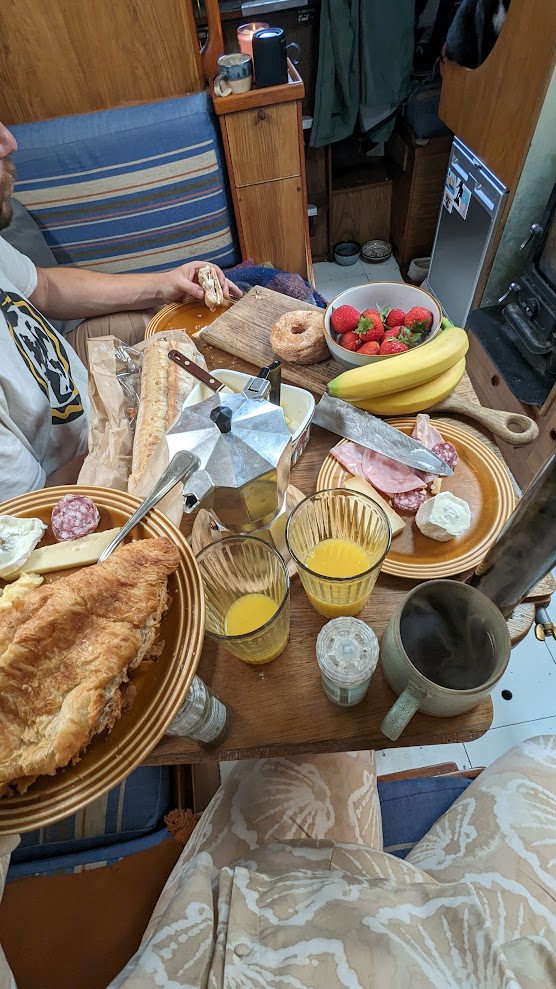
Let’s get the most boring one out of the way: utility is obviously important on a boat. In the irreverent words of Andy Samberg in Brooklyn 99, stuff can be two things, and living aboard requires that your stuff often has to be many, many things. Our tea towels are patterned, so they double up as wall decorations. We have some fake plants to make the room feel more lively, and also to hide a small patch on our walls where I mis-measured our pleather by a couple of centimetres. We tiled the walls around the wood burner and galley surfaces to add colour and sophistication, as well as making that whole space heat-water-and-mess-proof. Our mokka pot adds a sense of homey cosiness when it hangs from a small rail in the kitchen, but it’s also the only way we can have actually good quality coffee in the morning on board without draining power or adding kilos and kilos to our onboard weight.
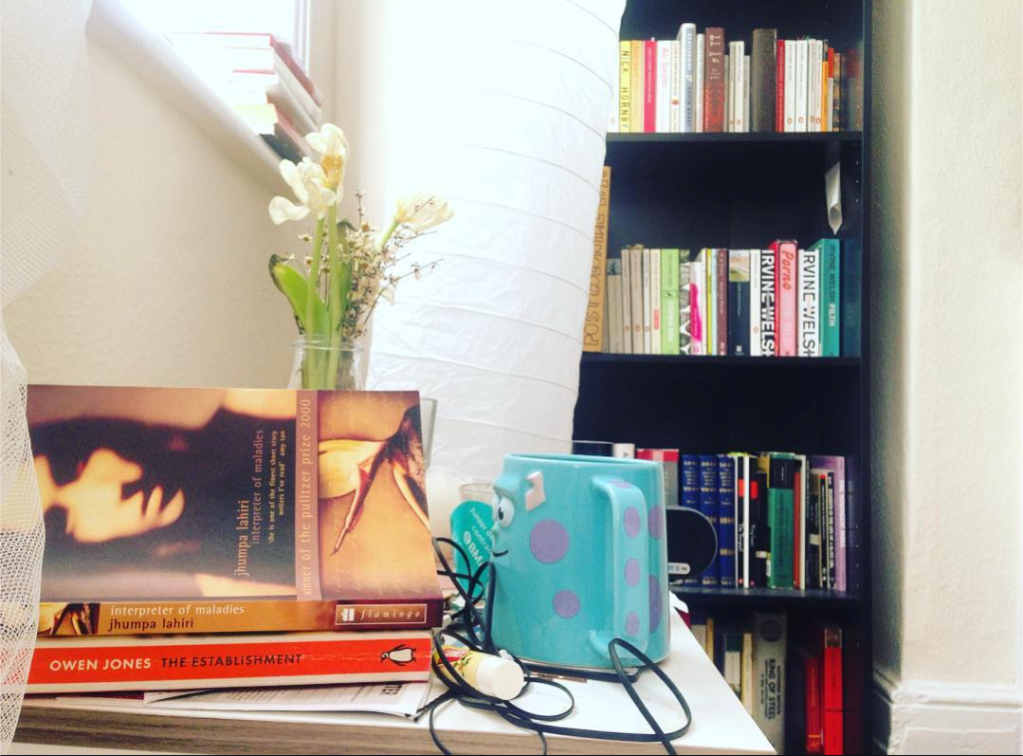
When we’re on land, the trinkets and decorations we choose to add to a home can be purely decorative. Currently staring at me, amongst the piles and to-do lists of things to sort before we leave this flat, is a massive cheese plant, walls full of prints and paintings, and kooky mugs I’ve bought from charity shops and markets. These are all things that we have to let go of. The mugs are just no match for rockier sailing excursions or aggressively fast ribs that bomb it down the river, so enamel tableware has subsequently become our best friend. It’s for the same reason that we don’t have our vinyl player or our real plants on board – they’re not going to survive on the water, where the air is saltier and the surfaces are less stable. Besides, I’d rather have some small fake plants than be cleaning soil out of the battery locker every other week.
Every now and again, however, Vibes does beat Utility to the draw, and the times that she has have blessed us with some of our favourite features on board. Things like an oil painting of a harbour that my 86-year-old Nanny acquired and gave to us (at the same time as a puzzle of a gorilla), or our burgeoning book shelves, or the mermaid stamp I got from New York when I was 21, or the Tate St. Ives fridge magnets that we take it in turn to choose every time we visit the gallery, or the sentimental postcards we have bought or received that make memories of those times and places glow in our memories. We only have so much space and weight to play with, so when we are letting something purely decorative join us on board, it is usually something sentimental and beautiful; things that are all about soul and perspective. The books are a mixture of long time favourites that we can revisit a thousand times, things we’ve seen that we think one another would enjoy, or poetry collections that smash your heart to smithereens before putting it back together. The oil painting manages to pull together every colour from every thread or tile in our galley and make them stronger and more vibrant, and reminds me of my Nanny, who is my role model for living life in your late eighties. The mermaid has her tits out, and if that’s not a vibe I don’t know what is. All of these things capture something about us and our personalities, whether it’s Jason’s deep-rooted creativity and open-mindedness, or my freedom and curiosity, and surely that’s the point of anything decorative: to show who we are as people.
Sitting and looking around Lowenna now, she looks so fresh and so clean, and it’s hard to believe she’s the same 48-year-old boat we bought in 2023 with leaky windows and no insulation. It was the way that the previous owner had decorated her that had pushed us over the edges – with photographs, drawings, books, shells. In only a few weeks we will be unpacking our Tate fridge magnets and adding a few more uncracked spines to the shelves and bringing that sense of home back on board, and I can’t wait to see how it all fits together.